What Is S4S Wood? The Complete Guide to S4S Lumber for Beginners
1. Introduction
Not all wood looks or feels the same straight off the shelf. Some boards are rough and uneven. Others are smooth, consistent, and ready to use the moment you bring them home. That difference often comes down to how the lumber was milled and finished.
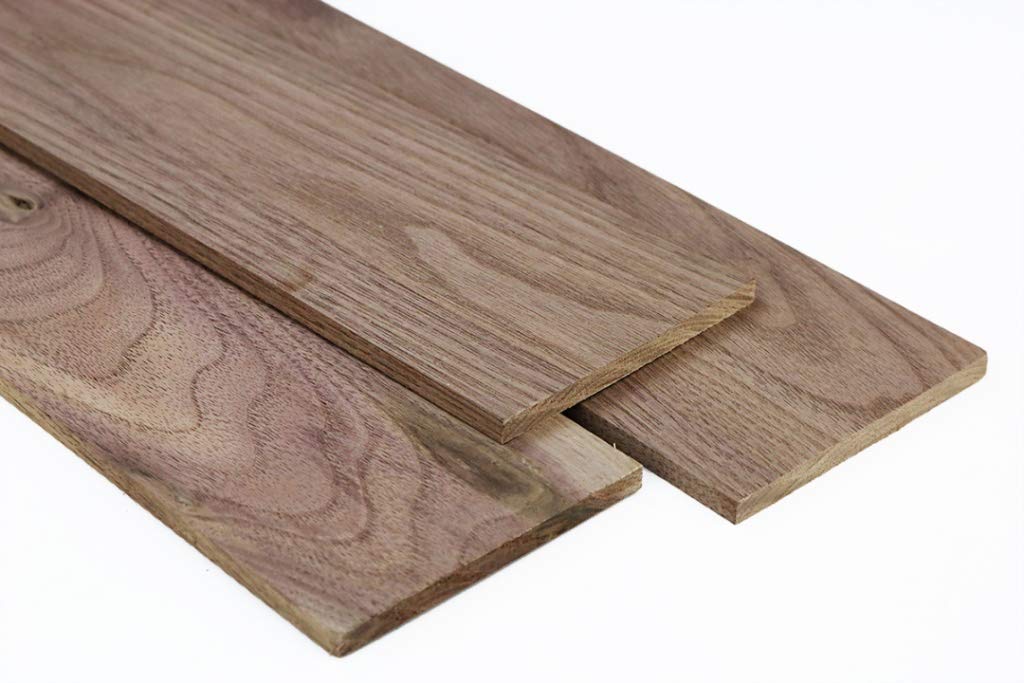
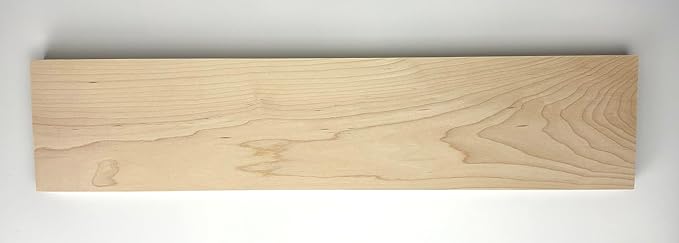
So, what is S4S wood, exactly? S4S lumber stands for “Surfaced on 4 Sides.” It refers to dimensional lumber that has been run through a planer and jointer on all four faces, resulting in a smooth, uniform board with flat surfaces and square edges. In short, S4S meaning for wood is simply that the board has been finished and is ready to use without any additional milling on your part.
In this guide, you will learn how S4S is made, how it compares to other lumber types, when to use it, and where to buy it, giving you a solid foundation before your next build.
2. What Does S4S Mean in Wood?
S4S lumber meaning comes directly from the milling process. The abbreviation stands for “Surfaced 4 Sides,” meaning each of the four long faces of the board has been mechanically planed and smoothed at the mill. The result is a piece of wood that is flat, consistent in thickness, and square on every edge.
What “Surfaced” Means in Lumber Milling
In lumber terminology, “surfaced” has a specific meaning. It means the board has been run through a planer or surfacer, which shaves thin layers off the face until it reaches a uniform, flat finish. The number that follows tells you how many sides received that treatment. That is the core of S4S meaning for wood: all four sides have been surfaced, including the two narrow edges, not just the wide faces.
How S4S Lumber Is Made
The process starts when a log is cut into rough blanks at the sawmill. These boards are uneven and coarse on every face. After drying, they move through a series of machines. A jointer flattens one face and squares one edge. A thickness planer brings the opposite face parallel to the first. Finally, a rip saw trims both edges straight and square. The finished product is what you pick up when you buy a piece of S4S hardwood or softwood at the store.
S4S vs Rough Sawn
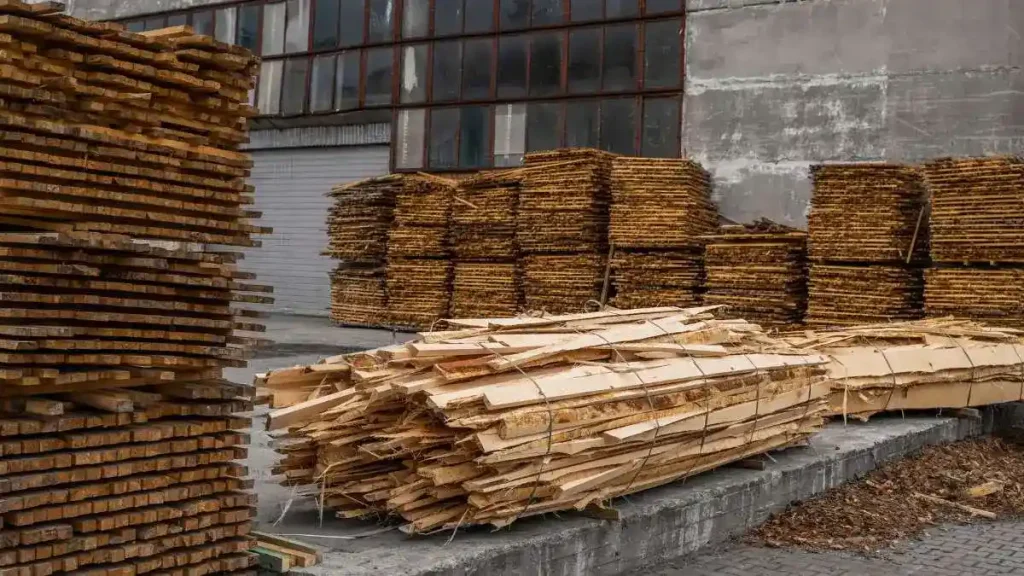
Rough-sawn lumber is coarse, uneven, and carries visible saw marks. It is cheaper but requires significant milling before use. S4S lumber arrives smooth, square, and ready to cut and assemble without any extra preparation. The trade-off is size: because material is removed during surfacing, S4S boards are slightly smaller than their nominal label. A 2×4, for instance, actually measures 1.5 by 3.5 inches.
What Does 4 by 4 Mean in Wood?
“4 by 4” is a nominal size, meaning it is a name used to identify the board, not its true measurement. What does 4 by 4 mean wood shoppers are actually buying? After surfacing, a 4×4 post typically measures 3.5 by 3.5 inches. Always check actual dimensions before planning your project, as nominal and real sizes differ consistently across all standard S4S lumber.
3. S4S vs Other Lumber Cuts (Comparison Section)
When you first explore woodworking, terms like S4S, S2S, rough sawn, dressed, and milled lumber can feel confusing. These labels are not interchangeable. Each one describes how much the wood has been processed, which directly affects how easy it is to use and how much preparation you need before starting a project.
This section breaks down the differences:
S4S vs S2S vs S1S
These abbreviations refer to how many surfaces of a board have been planed and smoothed.
S4S (Surfaced Four Sides)
- Planed on all four sides, including two faces and two edges
- Smooth, straight, and uniform in size
- Ready to use with minimal preparation
S2S (Surfaced Two Sides)
- Only the top and bottom faces are planed
- Edges remain rough and uneven
- Requires additional cutting and squaring
S1S (Surfaced One Side)
- Only one face is smooth
- Remaining sides are rough
- Often used when precise thickness control is required
S4S wood is the most convenient option, especially if you do not have tools like a jointer or planer. S2S and S1S lumber offer more flexibility but require more skill and equipment.
S4S vs Rough Sawn Lumber
The difference between these two types is easy to see and feel:
S4S Wood
- Smooth on all sides
- Consistent thickness and straight edges
- Clean and finished appearance
Rough Sawn Lumber
- Cut directly from the log with no smoothing
- Surface is coarse and uneven
- Typically oversized to allow for later milling
Rough sawn lumber is usually more affordable, but it requires planing, jointing, and sanding before use. S4S lumber eliminates this preparation step and is ready for immediate use.
S4S vs E4E Wood: What’s the Difference?
S4S and E4E wood are closely related, which often causes confusion.
S4S Lumber
- Planed on four sides
- Edges are square and sharp
E4E (Eased Four Edges) Wood
- Also surfaced on four sides
- Edges are slightly rounded for safety and appearance
In many retail settings, boards are both S4S and E4E. This means they are fully surfaced and have eased edges.
Key distinction:
- S4S focuses on smooth surfaces and square edges
- E4E refers specifically to rounded edges
If you see the term s4s e4e wood, it usually means the board has both characteristics.
S4S vs Dressed Lumber: Are They the Same?
These terms are related but not identical. Here’s the differences:
S4S Lumber
- A specific type of dressed lumber
- Always planed on all four sides
Dressed Lumber
- A general term for wood that has been planed or smoothed
- Can include S1S, S2S, or S4S
Conclusion:
All S4S lumber is dressed lumber, but not all dressed lumber is S4S. The phrase s4s dressed lumber is technically correct, but slightly redundant.
S4S vs Milled Lumber
This comparison is more about terminology than a strict category difference.
S4S Lumber
- A standardised, fully processed product
- Uniform in size and finish
Milled Lumber
- A broad term for any wood that has been processed or shaped
- Includes S4S, custom profiles, and partially finished boards
Important point:
S4S lumber is one type of milled lumber. However, milled lumber can also refer to custom cuts, decorative profiles, or partially finished materials.
Quick Comparison Table of S4S vs Other Lumber Cuts
| Lumber Type | Surfaces Finished | Edge Type | Ready to Use | Skill Level Needed | Typical Use Case |
| S4S Wood | 4 sides | Square or eased | Yes | Beginner-friendly | Furniture, DIY projects |
| S2S Lumber | 2 sides | Rough edges | No | Intermediate | Custom sizing projects |
| S1S Lumber | 1 side | Mostly rough | No | Advanced | Precision thickness control |
| Rough Sawn Lumber | None | Rough | No | Advanced | Full custom milling |
| E4E Wood | 4 sides | Rounded edges | Yes | Beginner-friendly | Furniture, shelves, décor |
| Dressed Lumber | Varies | Varies | Sometimes | Varies | General construction |
| Milled Lumber | Varies | Custom or varies | Sometimes | Varies | Custom woodworking applications |
S4S wood stands out as the most practical choice for beginners because it removes the need for extensive preparation. It allows you to focus on building rather than processing the material.
As your skills and tools improve, you may choose to work with S2S or rough sawn lumber for greater flexibility and cost savings. Until then, S4S lumber provides a reliable and efficient starting point for most woodworking projects.
4. S4S Lumber Dimensions — What You Need to Know

Understanding S4S lumber dimensions is one of the most important steps before buying wood for your project. Many beginners assume that a board labelled 2×4 or 1×10 reflects its exact size. In reality, those numbers are only part of the story.
This section explains how dimensions actually work, what sizes are commonly available, and what to expect when buying S4S wood.
Nominal vs Actual Dimensions Explained
When you see labels like S4S lumber 2×4 or S4S lumber 2×2, those are called nominal dimensions. They refer to the board’s size before it is dried and planed.
After processing into S4S wood, the board becomes smaller. These final measurements are called actual dimensions.
Here are some common examples:
| Nominal Size | Actual Size (Approx.) |
| 1×1 | 0.75 in x 0.75 in |
| 1×3 | 0.75 in x 2.5 in |
| 1×10 | 0.75 in x 9.25 in |
| 1×12 | 0.75 in x 11.25 in |
| 2×2 | 1.5 in x 1.5 in |
| 2×3 | 1.5 in x 2.5 in |
| 2×4 | 1.5 in x 3.5 in |
| 4×4 | 3.5 in x 3.5 in |
Why this matters:
If you design a project based on nominal sizes, your measurements may not fit correctly. Always plan using actual dimensions.
Common S4S Sizes You’ll Find
S4S wood is available in a wide range of sizes, but some are far more common and easier to source.
- Small stock: 1×1, 1×2, 1×3. Used for trims, frames, and small crafts
- Medium boards: 1×6, S4S 1×10, S4S 1×12. Ideal for shelves, panels, and furniture surfaces
- Structural sizes: S4S lumber 2×2, S4S lumber 2×3, S4S lumber 2×4. Common in framing, supports, and furniture bases
- Posts and beams: S4S 4×4 lumber. Used for legs, posts, and heavy-duty structures
Tip:
Availability depends on your supplier. Larger boards like 1×12 may be harder to find in some regions or more expensive due to material yield.
Why Actual Dimensions Are Smaller Than Nominal
This difference is not random. It comes from the way lumber is processed.
Originally, a 2×4 board was cut close to its full size. Over time, manufacturers began drying and planing wood to improve stability and smoothness. This process removes material from all sides.
As a result:
- Drying reduces moisture and slightly shrinks the wood
- Planing smooths surfaces and squares edges
- Standardisation ensures consistent sizing across suppliers
The nominal size remained for convenience and tradition, even though the actual size changed.
S4S Wood Profile and What It Looks Like
The S4S wood profile refers to the shape and finish of the board after processing.
Typical characteristics include:
- Smooth surfaces on all four sides
- Straight, uniform edges
- Consistent thickness along the entire length
Depending on the supplier, edges may be:
- Square:s ideal for joinery and tight fits
- Slightly rounded: often seen in retail boards for safety and easier handling
Visually, S4S lumber looks clean and ready for use, with minimal need for sanding or shaping.
Philippines Pricing for S4S Lumber
If you are researching 2×4 S4S wood price in the Philippines, it helps to understand how pricing typically works.
Prices vary based on wood species, length, and quality, but here is a general guide:
- 1×1 S4S wood price: Usually the most affordable. Commonly used for small projects and trims
- 2×2 S4S wood price: Moderately priced. Popular for furniture frames and supports
- 2×4 S4S wood price: Higher cost due to size and demand: Widely used in construction and structural work
Factors that affect price:
- Type of wood, such as pine, mahogany, or hardwood
- Length of the board
- Kiln-dried versus air-dried lumber
- Supplier location and availability
Important note:
Prices in the Philippines can fluctuate due to supply, import costs, and regional demand. Always check with local hardware stores or lumber suppliers for current rates. Getting familiar with S4S wood dimensions helps you avoid costly mistakes and wasted material.
5. Types of S4S Wood by Species

Here are the types of S4S wood by species to help you get familiar of them:
S4S Pine Lumber
The most widely available and affordable option at most hardware stores. S4S pine lumber is lightweight, easy to cut, and forgiving for beginners. It works well for shelving, framing, and painted furniture projects.
S4S Cedar Lumber
Naturally resistant to rot, insects, and moisture, S4S cedar lumber is a top choice for outdoor projects like garden beds, fencing, and deck trim. It has a pleasant aroma and weathers gracefully without treatment.
S4S Redwood Lumber
A premium choice for decking, outdoor furniture, and siding. S4S redwood lumber is naturally durable, dimensionally stable, and holds up beautifully in exposed conditions. It carries a higher price but rewards with longevity.
S4S Oak Hardwood
Dense, strong, and visually distinctive with prominent grain patterns. S4S oak hardwood is a favourite for furniture, flooring, and cabinetry. It takes stain well and holds fasteners firmly, making it a reliable choice for heirloom-quality work.
S4S Maple Lumber
One of the hardest domestic hardwoods available. S4S maple lumber has a tight, smooth grain that machines cleanly and takes a fine finish. It is especially popular for kitchen cabinets, butcher blocks, and workbench tops.
S4S Cherry Lumber
Prized for its warm, reddish-brown tone that deepens beautifully with age. S4S cherry lumber is a go-to for fine furniture, decorative boxes, and interior millwork. It is a premium wood that rewards careful, patient craftsmanship.
S4S Walnut Lumber
Rich, dark, and visually striking. S4S walnut lumber sits at the top end of domestic hardwood pricing and is most often used for statement furniture, tabletops, and decorative panels. Its straight grain machines and finishes exceptionally well.
S4S Poplar Wood
An affordable entry point into hardwood territory. S4S poplar wood is softer than most hardwoods, making it easy to work with hand and power tools. It paints beautifully, which makes it a smart choice for cabinets and interior trim that will not be stained.
S4S Ash Lumber
Strong, flexible, and shock-resistant. S4S ash lumber has historically been used for tool handles, sports equipment, and flooring. Its open grain takes stain well and produces a bold, attractive finish in furniture applications.
S4S Hickory Lumber
One of the hardest and heaviest domestic woods available. S4S hickory lumber has a rustic, contrasting grain pattern and is commonly used for flooring, chair rungs, and cabinetry where durability and character are both priorities.
S4S Alder Wood
A lightweight, moderately priced hardwood with a subtle, straight grain. S4S alder wood accepts stain evenly and is widely used in cabinet making, particularly in kitchen and furniture manufacturing where a consistent appearance matters.
S4S Beech
Dense and hard with a fine, uniform grain. S4S beech is a practical hardwood for furniture, flooring, and workbench surfaces. It steam-bends well and holds up to heavy use, though it is less resistant to moisture than some other species.
S4S Cypress Lumber
Naturally weather-resistant thanks to a compound called cypressene found in the wood. S4S cypress lumber is well suited for outdoor applications including siding, boat building, and raised garden structures, particularly in humid or wet climates.
S4S Fir Lumber
A strong, straight-grained softwood widely used in structural and decorative applications. S4S fir lumber is stiffer than pine and holds nails and screws firmly, making it a reliable choice for beams, shelving, and exposed interior framing.
S4S Teak Wood
Considered one of the world’s premier outdoor woods. S4S teak wood contains natural oils that repel water and resist decay without any treatment required. It is the preferred choice for outdoor furniture, boat decking, and high-end garden structures.
S4S Acacia
Dense, hard, and visually rich with interlocking grain patterns. S4S acacia is widely used across Asia for furniture, flooring, and decorative work. It is highly durable, relatively affordable in local markets, and offers a distinctive natural look.
S4S Rubber Wood
Harvested from plantation rubber trees at the end of their latex-producing life. S4S rubber wood is an eco-friendly, budget-conscious hardwood used widely in furniture manufacturing. It machines cleanly, takes paint and stain well, and is a sustainable alternative to old-growth species.
S4S Coco Lumber
A staple material in Philippine construction and furniture making. S4S coco lumber is milled from mature coconut palm trees, offering a dense, fibrous alternative to traditional hardwoods. It is affordable, locally available, and widely used for light framing, furniture, and interior work.
FJ S4S Wood
Finger jointed and surfaced on four sides. FJ S4S wood is made by gluing shorter wood pieces together end-to-end using interlocking cuts before surfacing. The result is a stable, straight, and cost-effective board best suited for painted applications where the joints will not be visible.
S4S SYP Wood
Southern Yellow Pine is one of the strongest softwood species available. S4S SYP wood is dense, stiff, and takes preservative treatment well, making it a popular choice for structural framing, decking, and outdoor construction in North America.
6. S4S Hardwood vs S4S Softwood
The S4S hardwood meaning is straightforward: it is the same surfaced-on-four-sides board, but the species changes everything about how it looks, performs, and costs.
S4S hardwood boards come from deciduous trees like oak, maple, walnut, and ash. They are denser, more durable, and better suited to furniture, cabinetry, and flooring where appearance and longevity matter.
Softwood S4S comes from coniferous trees like pine, fir, and cedar. It is lighter, easier to cut, and considerably more affordable, making it the default choice for framing, painted furniture, and utility shelving.
S4S hardwood can cost two to five times more per board foot than softwood. For structural or painted work, softwood is the practical call. For stained, natural-finish, or heirloom-quality pieces, hardwood is worth the investment.
The right choice comes down to your budget, the project’s purpose, and how the finished piece will look.
7. S4S Lumber Grades
S4S lumber grade is the industry’s way of ranking boards by appearance and the number of natural defects like knots, splits, and discoloration. The most common grades, from highest to lowest, are Select, Number 1, Number 2, and Number 3.
S4S good lumber refers to boards graded as “B and Better” or “Select,” meaning they are nearly defect-free with a clean, consistent appearance. These are the right choice when wood will be visible in the finished piece, such as furniture, shelving, or trim.
As the grade drops, so does the price. Number 2 is the standard for framing and construction where appearance is secondary to function.
S4S good lumber price can run two to three times higher than Number 2, depending on species and size. For painted or hidden work, a lower grade makes complete sense. For stained or natural-finish projects, the cleaner grade is almost always worth paying for.
8. Kiln Dried S4S Lumber (KD)

S4S KD lumber means the board has been dried in a controlled kiln before surfacing, bringing moisture content down to a stable level, typically between 6 and 19 percent.
Wood moves as it dries. Boards installed with excess moisture will shrink, warp, or crack over time. S4S kiln dried wood has already gone through that process, so it arrives ready to use without the risk of movement after installation.
Compared to air-dried options, S4S dry lumber from a kiln reaches consistent moisture levels faster and more uniformly, making it the better choice for indoor projects like furniture, cabinetry, and flooring. S4S KD wood holds joints, finishes, and fasteners more reliably than green or partially dried alternatives.
In the Philippines, S4S lumber kiln dried tanguile is a popular choice for interior joinery and furniture, producing stable, workable boards well suited to the country’s humid climate.
9. Common Uses of S4S Wood
Because it arrives smooth, square, and ready to work with, S4S wood fits naturally into a wide range of projects across construction, furniture making, and interior finishing.
- Furniture making: S4S solid wood is the standard choice for tables, chairs, bed frames, and shelving units. The pre-surfaced faces save significant prep time and produce cleaner glue joints and joinery.
- Cabinetry and millwork: The consistent dimensions and smooth surfaces of S4S boards make them ideal for cabinet boxes, drawer fronts, face frames, and interior millwork where precision and appearance both matter.
- S4S wood trim and moldings: S4S wood trim is used throughout home interiors for baseboards, door casings, window surrounds, and decorative accents. The square edges profile cleanly and install without additional surfacing.
- S4S wood flooring: Hardwood species like oak, maple, and ash are commonly milled to S4S specifications before being cut into S4S wood flooring strips. The uniform thickness ensures a level, consistent installation.
- Shelving and paneling: S4S wood planks are a practical choice for wall paneling, open shelving, and built-in storage. They sit flat, look clean, and require only cutting and finishing before installation.
- Framing: S4S framing lumber is used in light residential construction where dimensional consistency is important. While rough lumber is common in structural framing, S4S is preferred when walls or elements will be left exposed.
- Outdoor and structural applications: S4S treated wood refers to S4S lumber that has been pressure-treated with preservatives, making it suitable for decks, fences, pergolas, and ground-contact structures.
- Heavy construction: S4S timber in larger dimensions is used for posts, beams, and heavy framing where both strength and a finished appearance are required.
- Decorative elements: S4S wood base and decorative trim pieces finish rooms, cover transitions, and add visual detail to both residential and commercial interiors.
10. S4S Lumber Pricing Guide
Several factors shape S4S lumber price, including species, grade, dimensions, moisture treatment, and where you buy. Understanding these variables helps you budget accurately and avoid overpaying.
What Affects the Price
Hardwood species like oak, walnut, and tanguile cost significantly more than softwoods like pine or fir. Grade matters too: clear, defect-free boards carry a premium over Number 2 or construction-grade lumber. Kiln-dried boards also sit slightly higher than air-dried equivalents due to the additional processing involved.
Price Ranges by Species
Softwood S4S pine is the most affordable entry point, suited for framing, utility shelving, and painted projects. Mid-range options include locally available hardwoods like tanguile or apitong. Exotic or imported hardwoods sit at the top end and are typically reserved for furniture or finish carpentry.
Philippines Pricing
Local pricing varies by supplier, but approximate retail ranges for common sizes are:
- 1×1 S4S wood price Philippines: around PHP 30 to 60 per piece for softwood
- 2×2 S4S wood price Philippines: roughly PHP 80 to 150 per piece depending on species
- 2×4 S4S wood price Philippines: typically PHP 150 to 300 per piece for standard softwood
S4S good lumber price for hardwood grades like tanguile runs noticeably higher, often two to three times these figures.
Tips to Save Money
Buying in bulk from a lumber yard almost always beats retail hardware store pricing. Choosing one grade below what you need for hidden or structural parts also adds up to real savings over a full project. For painted work, there is rarely any reason to pay for a clear grade board.
11. Where to Buy S4S Lumber
Whether you prefer shopping from home or picking boards in person, there are reliable options for sourcing quality S4S lumber in most markets.
Buying S4S Lumber Online
S4S lumber online is increasingly easy to find through both specialty retailers and general home improvement platforms. For hardwoods, dedicated wood suppliers tend to offer better selection and quality than big-box stores. When you buy S4S wood online, look for suppliers that list actual dimensions, moisture content, and grade clearly on each product listing.
For S4S hardwood online, reputable sources include specialty retailers like Woodworkers Source, Bell Forest Products, and Certainly Wood, which allow you to filter by species, grade, and thickness.
Before ordering, always check:
- Whether boards are sold by the board fot or piece
- The listed moisture content, kiln-dried is preferable for indoor projects
- Return and damage policies, since S4S lumber delivery can occasionally result in warped or damaged boards during transit
- Minimum order quantities, as some suppliers require bulk purchases for delivery
Buying by Location
If you are looking for a trusted local supplier, here are some recommended places to source S4S lumber by location:
- S4S lumber Vancouver: Windsor Plywood Vancouver, 1098 SW Marine Dr, Vancouver, BC V6P 5Z3
- S4S lumber Toronto: Hanford Lumber Ltd, 45 Bethridge Rd, Etobicoke, ON M9W 1M9, Canada
- S4S lumber Edmonton: Windsor Plywood Edmonton, Edmonton, AB
- S4S lumber Calgary: Windsor Plywood Calgary (South East), 4700 104th Ave SE, Calgary, AB T2C 2H3
- S4S lumber Ontario: Windsor Plywood Thunder Bay, 926 Tungsten Street, Thunder Bay, ON P7B 5Z6
- S4S lumber Canada: Hanford Lumber Ltd, 45 Bethridge Rd, Etobicoke, ON M9W 1M9, Canada
- S4S lumber Seattle: Crosscut Hardwoods, 4100 1st Ave S, Seattle, WA 98134, United States
- S4S lumber Houston: Houston Hardwoods Inc, 4910 W 34th St, Houston, TX 77092, United States
- S4S lumber UK: QTD Group, 280 Nine Mile Ride, Finchampstead, Berkshire
- S4S lumber Menards: Browse their dimensional lumber range directly at Menards S4S Lumber
- S4S wood Lowes: Explore their lumber and composites selection at Lowe’s S4S Wood
- S4S wood supplier in Cebu: Cebu Home and Builders Centre, A. S. Fortuna St, Banilad, Mandaue, 6014 Cebu, Philippines
12. How to Work With S4S Lumber (Beginner Tips)
One of the biggest advantages of S4S wood is that it requires minimal preparation before you start building. The surfaces are already flat, the edges are square, and the dimensions are consistent. Your job is simply to cut it to size and assemble.
Basic Tools You Will Need
For most beginner projects, a circular saw or miter saw handles your cuts, a drill drives your fasteners, and a sanding block smooths any rough edges left after cutting. A tape measure, square, and pencil round out the essentials.
Cutting, Joining, and Finishing
Always mark your cut lines clearly and let the saw do the work without forcing it. When joining boards, pre-drilling prevents splitting, especially near the ends. The S4S edge is already square, which makes butt joints and edge glue-ups straightforward without additional preparation.
For finishing, S4S wood dressing begins with a light sand using 120 to 180 grit paper to remove any minor mill marks before applying paint or stain. Wipe away dust thoroughly before coating. Softwood takes paint well with a primer coat first. Hardwood responds beautifully to stain, which brings out the natural grain.
Common Beginner Mistakes to Avoid
The most frequent mistake is ignoring S4S wood grade when purchasing. Reaching for the cheapest boards without checking for warping or excessive knots leads to frustrating results later. Always sight down the length of a board in the store before buying it.
Another common error is skipping the acclimation step. Even kiln-dried lumber benefits from sitting in your workspace for a day or two before use, allowing it to adjust to the local humidity and reducing the risk of movement after assembly.
Sand with the grain, not against it, and always apply finish in thin, even coats for the cleanest result.
13. Frequently Asked Questions (FAQ)
What does S4S mean in lumber?
S4S lumber stands for Surfaced 4 Sides. It means the board has been planed flat and smooth on both wide faces and both narrow edges, leaving a consistent, ready-to-use board straight from the shelf. This is the core S4S meaning for wood you will encounter at any lumber yard or hardware store.
What is the difference between S4S and rough sawn lumber?
Rough sawn lumber comes straight from the saw with no planing or smoothing applied. It is coarser, cheaper, and requires additional milling before use. S4S lumber has been fully surfaced on all four sides and is ready to cut and build with immediately, making it the more practical choice for most beginners.
Is S4S lumber the same as dressed lumber?
Essentially, yes. Dressed lumber and DAR (Dressed All Round) are terms used more commonly in the UK, Australia, and other Commonwealth countries to describe the same product as S4S. The milling result is identical.
What are standard S4S lumber dimensions?
S4S lumber is sold by nominal size, but the actual dimensions are smaller due to material removed during surfacing. A common example is the 2×4, which actually measures 1.5 by 3.5 inches. Always confirm actual dimensions before planning a project.
Is S4S wood good for outdoor use?
It depends on the species and finish. S4S cedar and treated pine perform well outdoors. Untreated softwood S4S boards will deteriorate without a proper weatherproof sealant or paint. For exposed outdoor use, always choose a naturally durable or pressure-treated species.
What is FJ S4S wood?
FJ S4S wood stands for Finger Jointed and Surfaced 4 Sides. Finger jointing means shorter pieces of wood have been glued end-to-end using interlocking cuts to create a longer board. FJ S4S boards are stable, cost-effective, and work well for painted applications where the joints will not be visible.
What is S4S KD lumber?
S4S KD stands for Surfaced 4 Sides, Kiln Dried. The lumber has been dried in a controlled kiln before surfacing, resulting in a stable board less prone to warping or shrinking after installation.
What is S4S good lumber?
Good is a lumber grade indicating a high-quality, nearly defect-free board. S4S good lumber is best suited for visible, finished surfaces like furniture, shelving, and trim work.
What does E4E mean vs S4S?
S4S E4E wood refers to lumber that has been both surfaced and edged on all four sides. In practice, modern S4S lumber already includes straight, square edges, so the two terms describe essentially the same finished product. E4E simply places additional emphasis on the edging process, and the distinction matters more when sourcing specialty hardwoods with live or irregular edges.
14. Conclusion
Choosing the right lumber does not have to be complicated, and understanding S4S wood is a great place to start. Throughout this guide, you have learned that S4S lumber means Surfaced 4 Sides, a board that has been planed flat and square on all four faces, ready to use straight from the shelf. You have seen how it compares to rough-sawn, S2S, and dressed lumber, explored the differences between hardwood and softwood options, and learned how grades, kiln drying, species, and pricing all factor into making the right choice for your project.
Whether you are building furniture, fitting out a cabinet, or planning a structural build, S4S meaning for wood comes down to one simple promise: less prep work, more consistent results.
Ready to get started? Contact a local lumber supplier or hardwood dealer to source the right S4S boards for your next project. If you are comparing sheet goods and engineered options alongside solid lumber, our guide to Finger Joint Laminated Board is worth reading next. It covers how finger-jointed panels are made, where they perform best, and how they stack up against solid S4S boards for furniture and cabinetry work.