15 Types of Wood Joints Used in Woodworking and Furniture Making
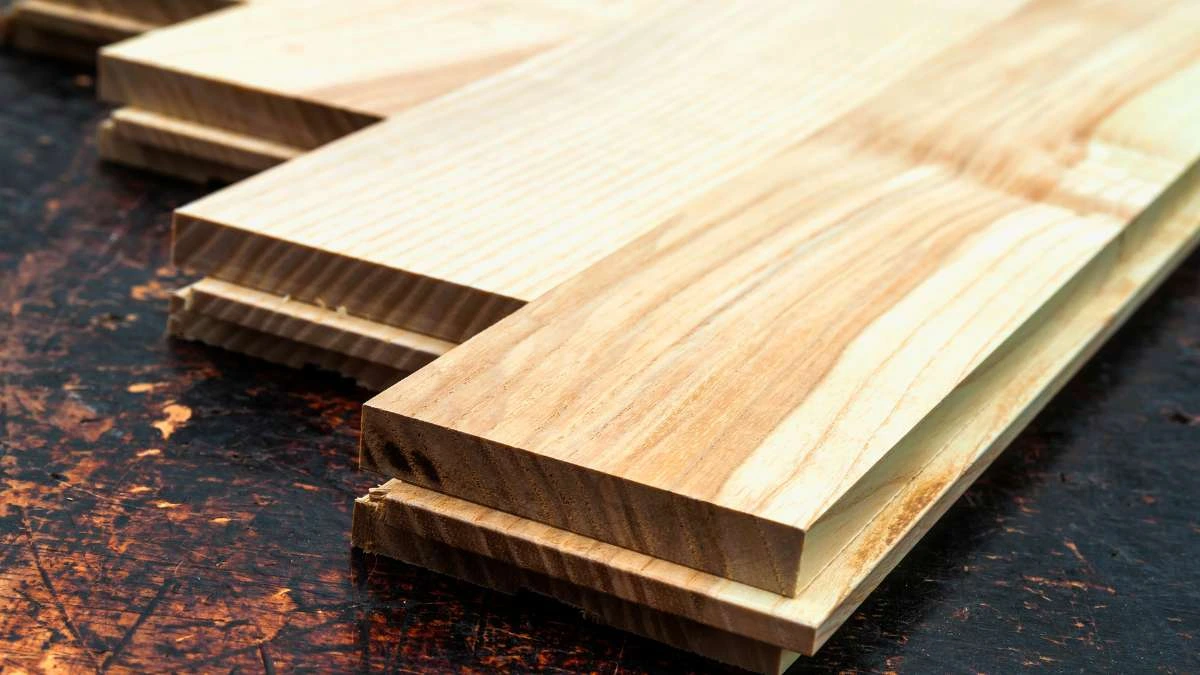
Whether you are just getting started in woodworking or you have been building furniture for years, understanding the different types of wood joints is one of the most useful things you can know. The joint you choose affects how strong your piece is, how long it lasts, how it looks, and how much time and skill it takes to put together. Choose the right one and everything comes together cleanly. Choose the wrong one and you might end up with something that wobbles, gaps, or falls apart under pressure.
This guide covers 15 of the most widely used wood joints in woodworking and furniture making. We will keep each one concise and practical so you can quickly understand what it is, how it works, and where it is best used.
Why Wood Joints Matter
Wood joints are the foundation of almost every woodworking project. They are how individual pieces of timber are connected to form a larger structure, whether that is a simple picture frame or a complex piece of hand crafted furniture. A good joint distributes load effectively, resists movement and racking, and holds its integrity over time.
Different joints serve different purposes. Some prioritize raw strength, others prioritize appearance, and some are chosen simply because they are fast and easy to make. Knowing the options gives you the flexibility to match the right technique to each project.
15 Types of Wood Joints
1. Butt Joint
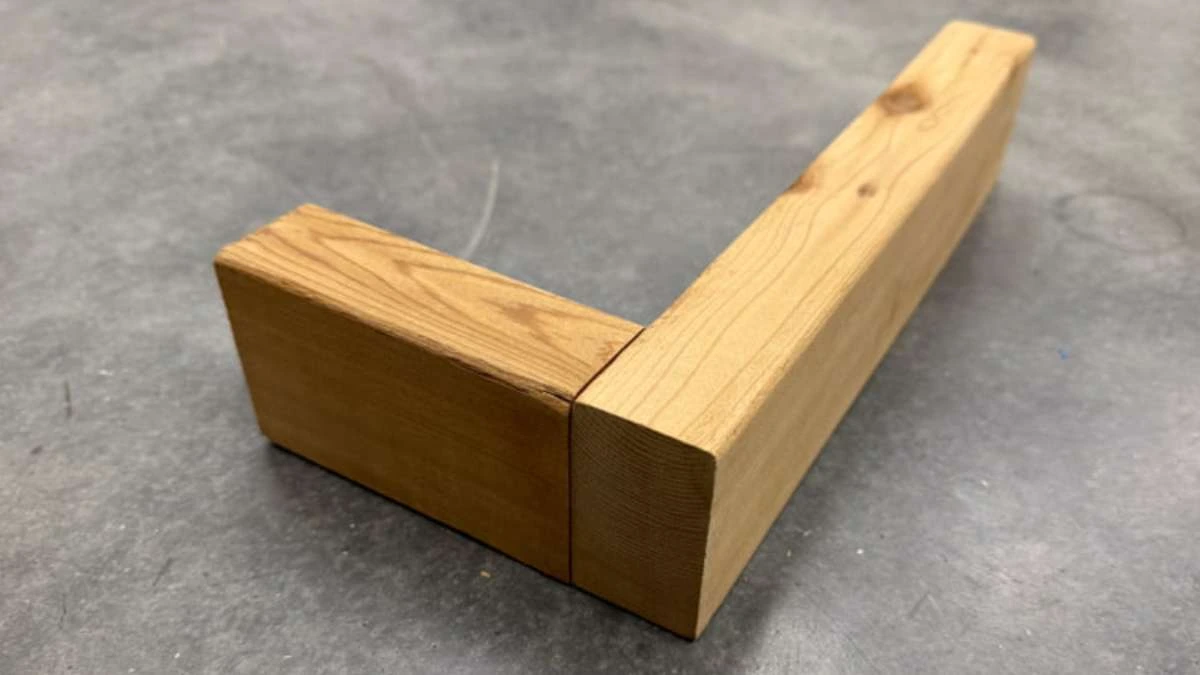
The butt joint is about as simple as it gets. Two pieces of wood are placed end to end or end to face and fastened together with nails, screws, or glue. It is quick, requires no special tools, and is easy for beginners. The downside is that it is the weakest joint on this list because there is minimal gluing surface and no mechanical interlock. It works fine for basic framing and rough construction where appearance and long term strength are not critical concerns.
2. Miter Joint
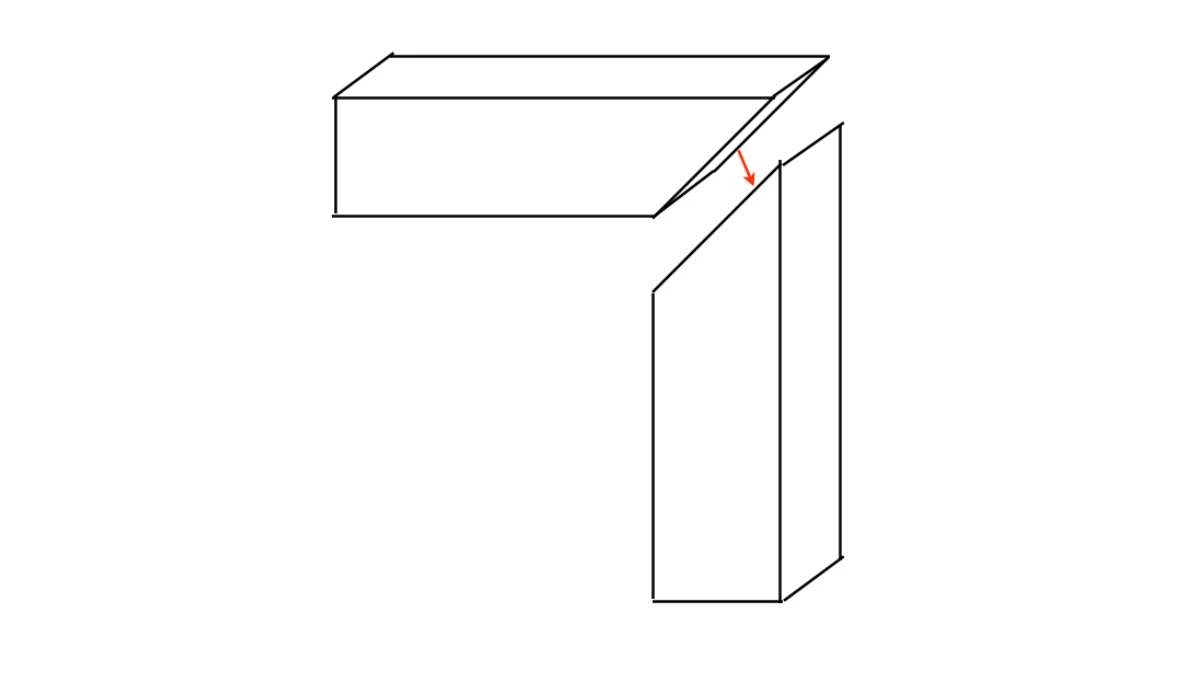
A miter joint is formed by cutting each piece at an angle, typically 45 degrees, so they meet at a corner without either piece’s end grain being visible. This makes it a popular choice for picture frames, door casings, crown moulding, and decorative trim. It looks clean and professional, but it is not particularly strong on its own. Miter joints are often reinforced with biscuits, splines, or fasteners to add holding power.
3. Lap Joint
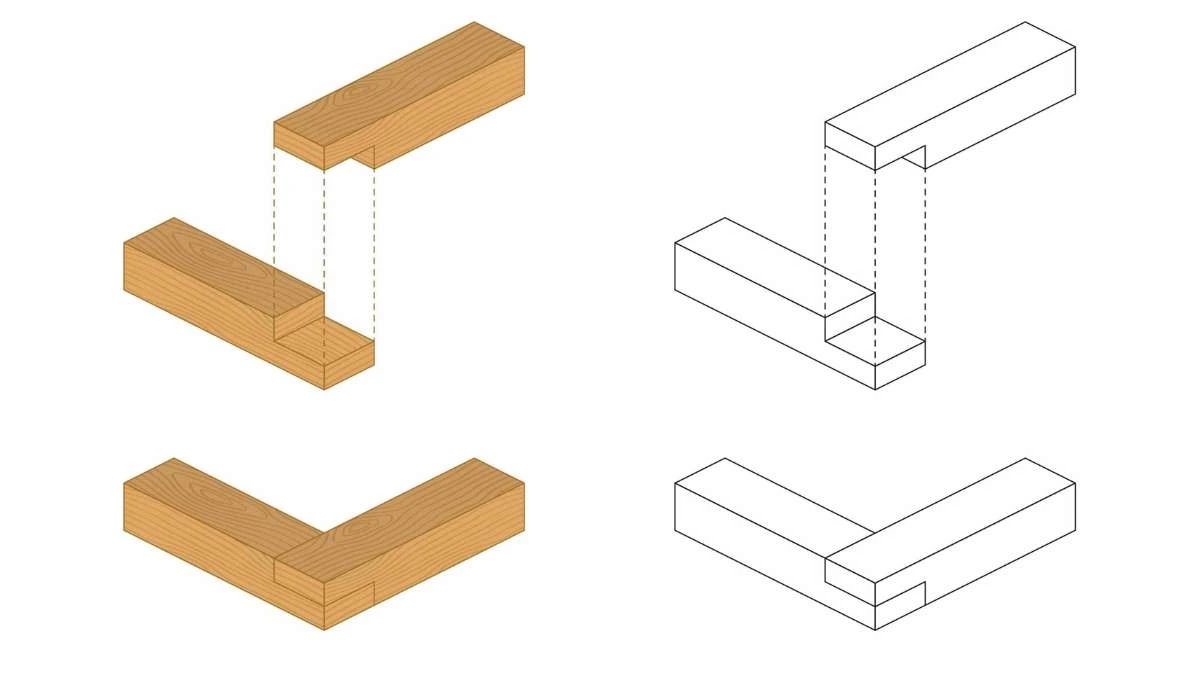
A lap joint is made by removing half the thickness of each piece so they overlap and sit flush when joined. It is stronger than a butt joint because the overlapping sections provide more gluing surface and resist twisting. You will see lap joints used in frame construction, light furniture, and anywhere two pieces need to cross or meet at a corner. It is relatively easy to cut and does not require advanced joinery skills.
4. Finger Joint
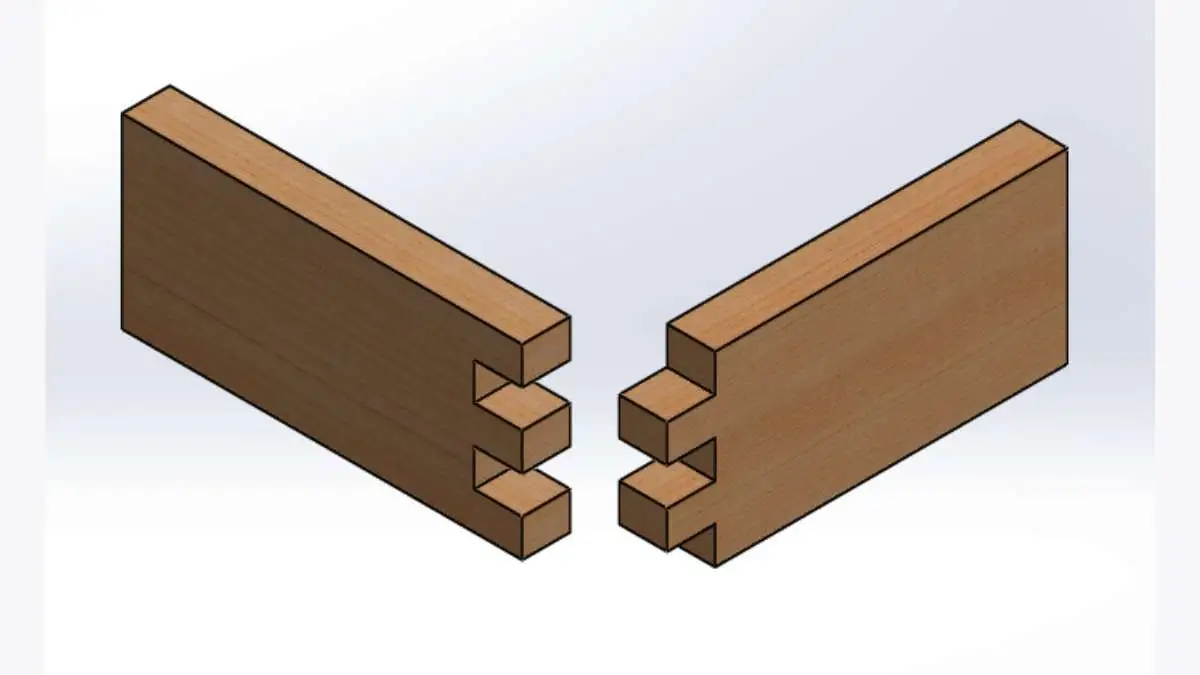
The finger joint uses a series of interlocking rectangular cuts that mesh together like two hands clasping. It dramatically increases the gluing surface compared to a simple butt joint, resulting in a strong, reliable bond. Finger joints are widely used in the production of finger jointed lumber, door frames, and interior trim. They are also used in decorative box making. The joint is visible when left unfinished, so it is typically used in painted applications or where the pattern itself is part of the design.
5. Dovetail Joint
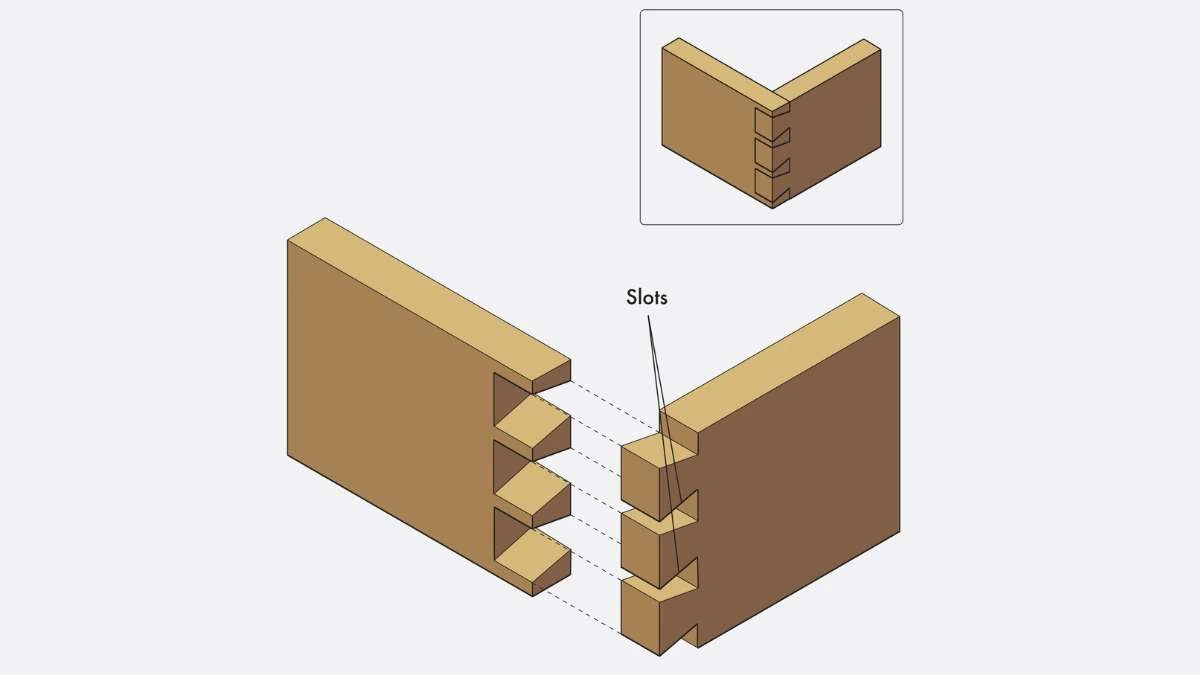
The dovetail joint is one of the most respected joints in all of woodworking. Its interlocking fan shaped tails and pins create a mechanical connection that is extremely resistant to being pulled apart. It is a hallmark of quality craftsmanship and is traditionally used in drawer construction and fine furniture making. Cutting dovetails by hand requires skill and patience, though router jigs have made it more accessible to hobbyists. When you see exposed dovetails on a piece of furniture, you know quality work went into it.
6. Box Joint
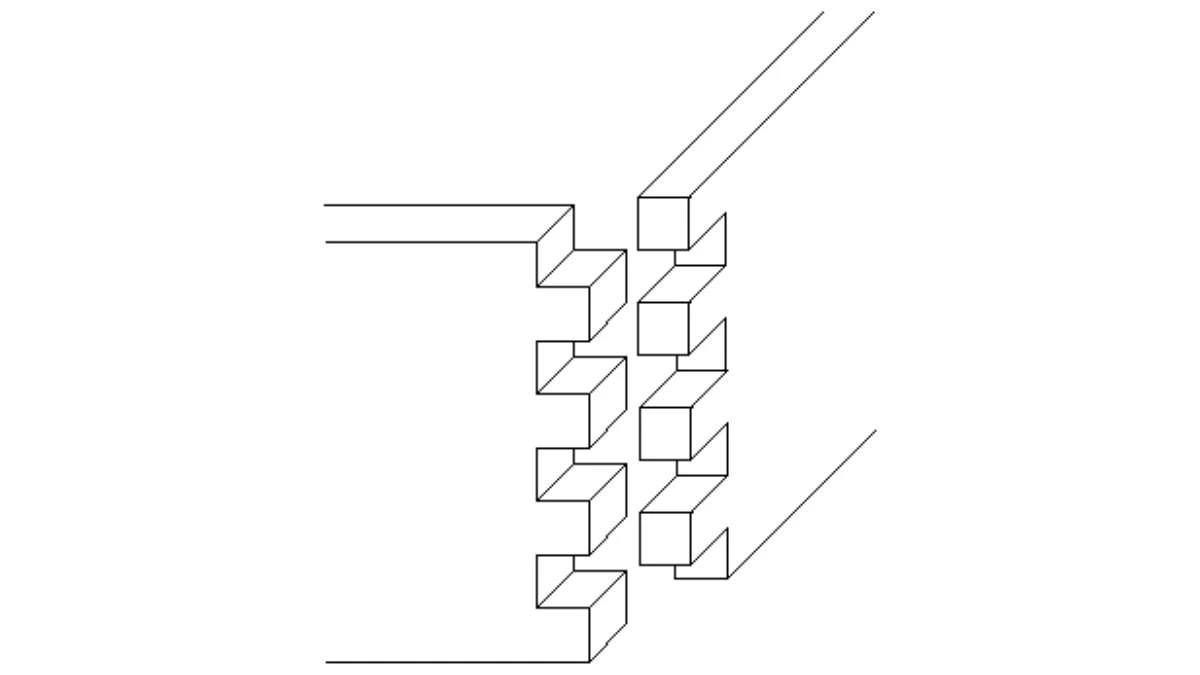
The box joint, also called a finger joint in furniture contexts, uses square interlocking pins rather than the angled tails of a dovetail. It is easier to cut than a dovetail and still offers a large gluing surface and good strength. Box joints are commonly used for boxes, drawers, and small carcass construction. They have a clean, geometric look that works well in both traditional and modern furniture styles.
7. Mortise and Tenon Joint
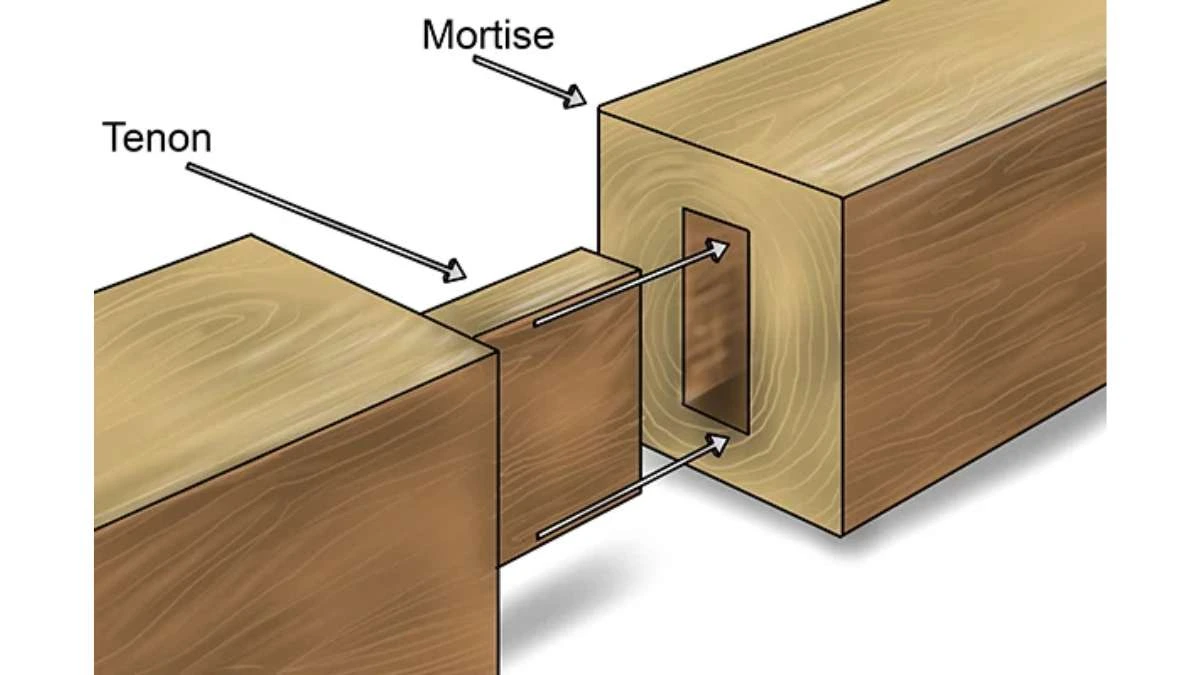
The mortise and tenon is one of the oldest and strongest woodworking joints in existence. A tenon, a projecting tongue cut on one piece, fits snugly into a mortise, a corresponding rectangular hole cut in the other. The result is a joint that handles both tension and shear forces extremely well. It is the go to joint for chair legs, table bases, door frames, and structural furniture. It takes more time and skill to execute correctly, but the results are built to last for generations.
8. Bridle Joint
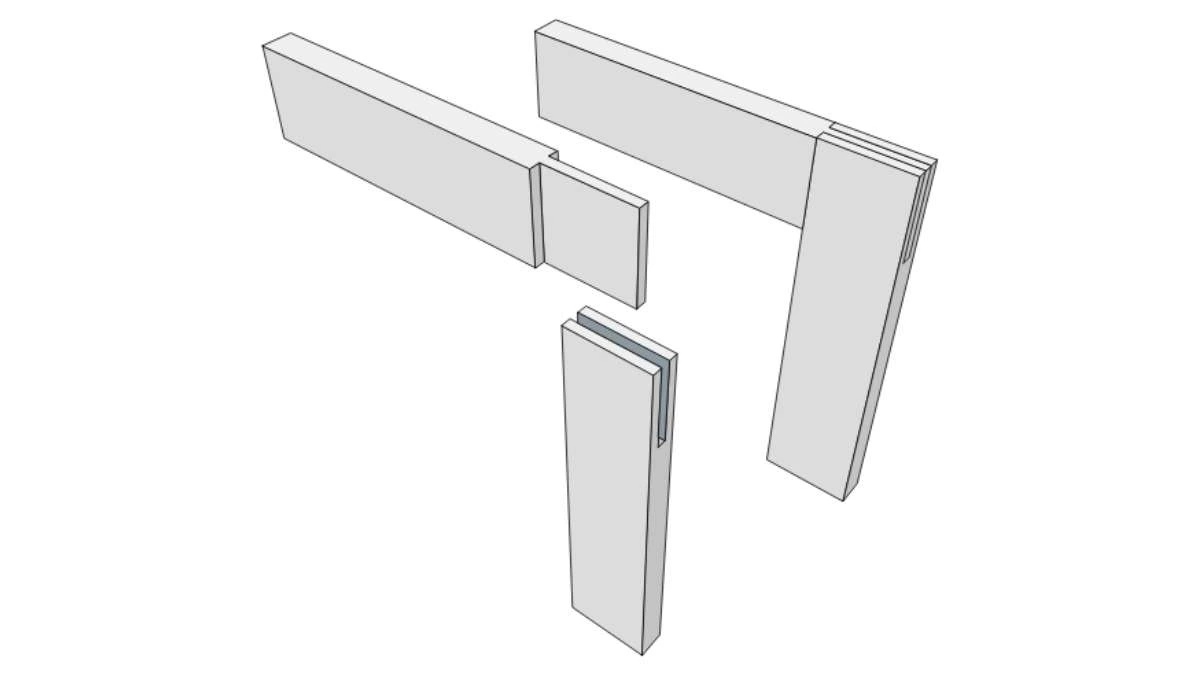
A bridle joint is essentially an open mortise and tenon. Instead of the tenon fitting into a closed pocket, it slides into an open slot cut at the end of the mating piece. This makes it easier to cut while still offering good mechanical strength and a large gluing area. It is commonly used in frame construction, workbenches, and leg to rail connections in furniture. The open design also makes it easy to check the fit before gluing.
9. Tongue and Groove Joint
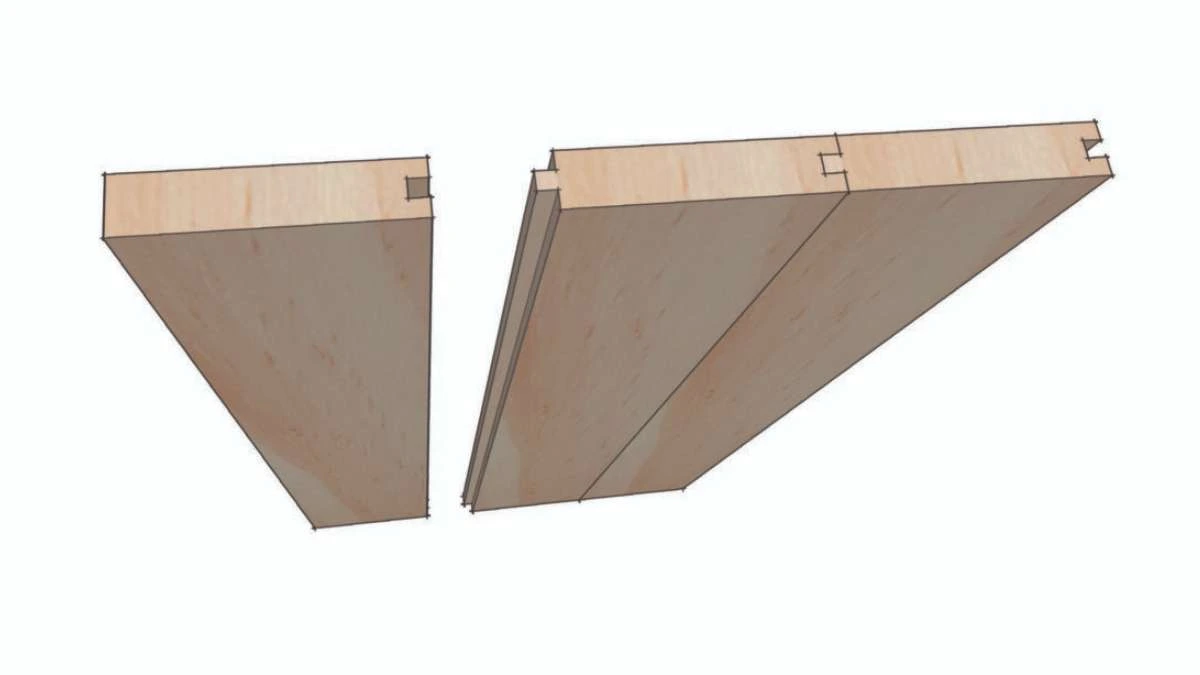
Tongue and groove joints are designed for joining boards edge to edge. One board has a protruding tongue milled along its edge, and the other has a corresponding groove. The two pieces lock together and can be glued for a permanent bond or left floating to allow for wood movement. This joint is the standard for hardwood flooring, wall panelling, and large panel glue ups. It aligns boards perfectly and distributes stress evenly across the joint.
10. Rabbet Joint
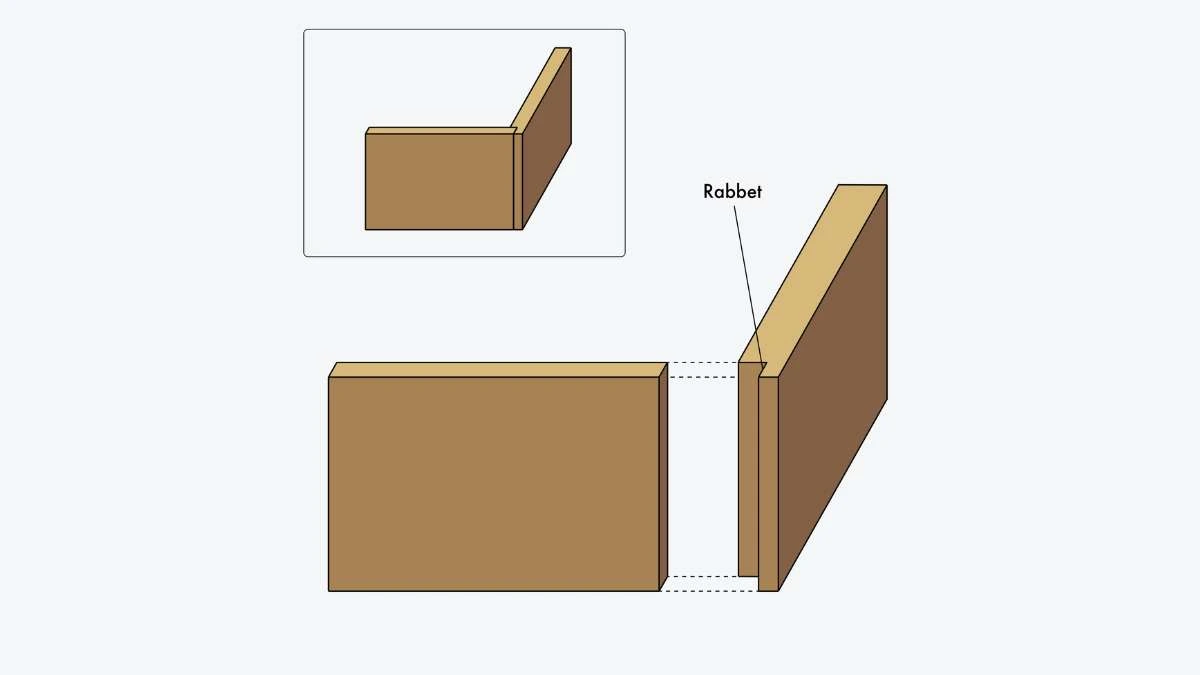
A rabbet is an L shaped recess cut along the edge or end of a board. When two rabbeted pieces are joined, or when a flat panel sits into a rabbet, the result is a clean, recessed connection that hides the end grain and provides more gluing surface than a butt joint. Rabbet joints are widely used in cabinet backs, drawer bottoms, shelving, and box construction. They are straightforward to cut with a table saw or router and hold up well with glue and fasteners.
11. Dado Joint
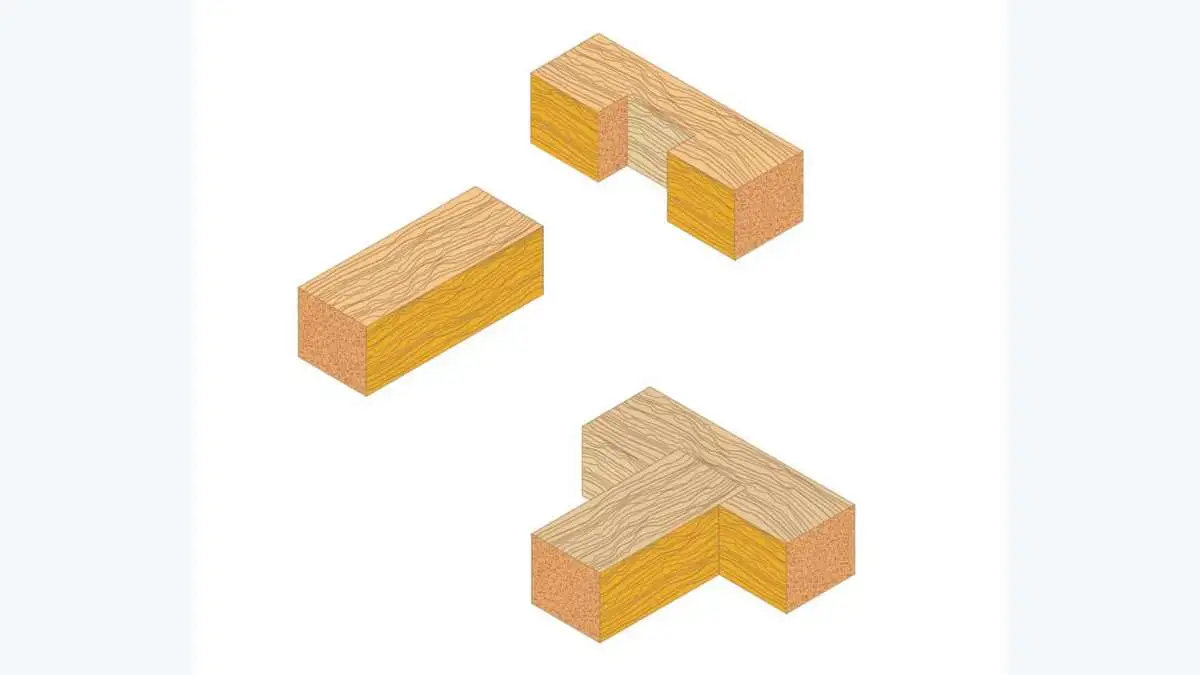
A dado is a channel cut across the grain of a board, designed to receive the end or edge of another piece. It is the standard joint for shelf construction in bookcases and cabinets because it supports the shelf from below and resists sagging. The fit should be snug but not so tight that it requires force to assemble. Dado joints are easy to cut with a table saw and a dado blade, and they are one of the most reliable joints for casework and storage furniture.
12. Biscuit Joint
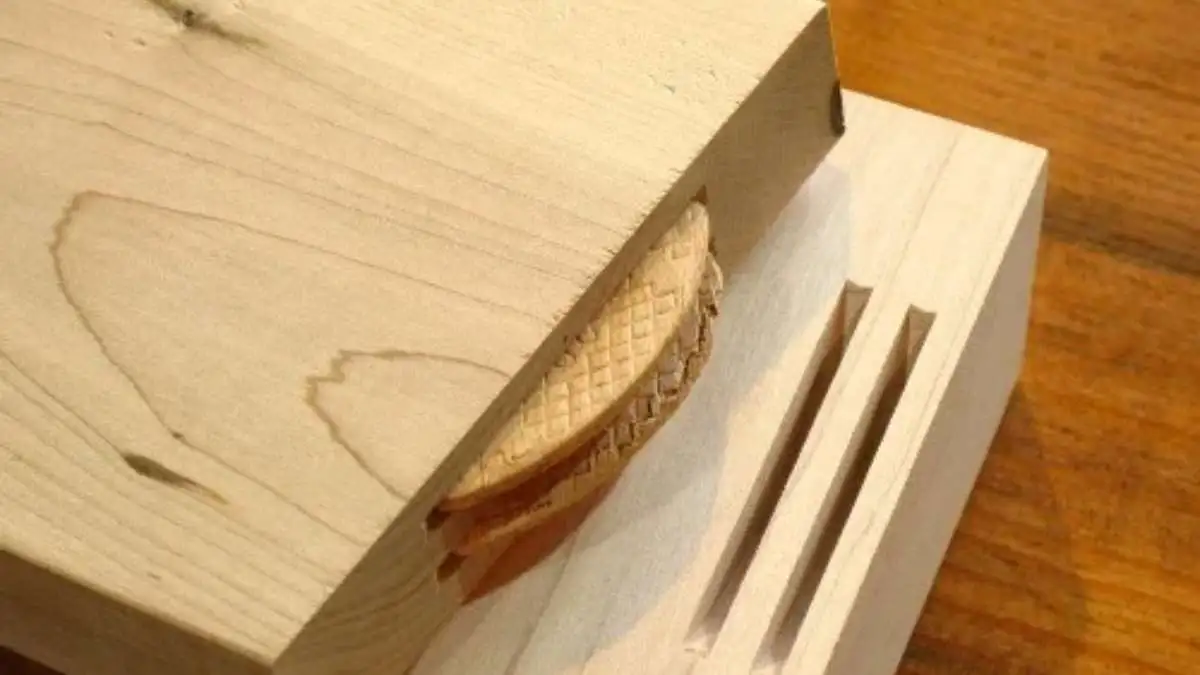
Biscuit joinery uses small oval shaped wooden wafers, called biscuits, that fit into matching slots cut by a biscuit joiner tool. When glue is applied, the biscuits swell slightly and create a tight bond. Biscuit joints are primarily used for aligning and strengthening edge to edge glue ups, such as tabletops and panel construction. They are fast, clean, and accessible to woodworkers of most skill levels. While they do not add a huge amount of strength on their own, they excel at keeping joints aligned during glue up.
13. Dowel Joint
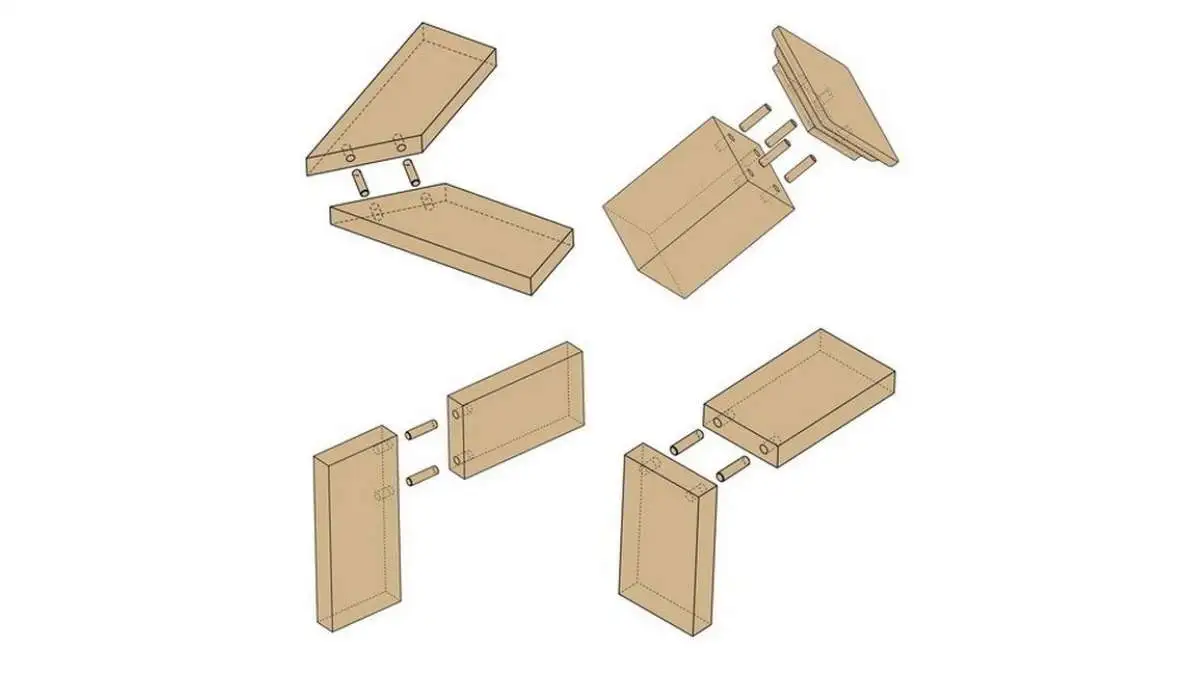
Dowel joints use cylindrical wooden pegs glued into matching holes drilled in both pieces. They are stronger than biscuit joints and work well for furniture assembly, cabinet construction, and frame joints. The key challenge with dowel joinery is drilling perfectly aligned holes in both pieces so the dowels line up correctly. Dowel jigs and center point markers help with this. When done well, dowel joints are clean, strong, and nearly invisible in the finished piece.
14. Pocket Hole Joint
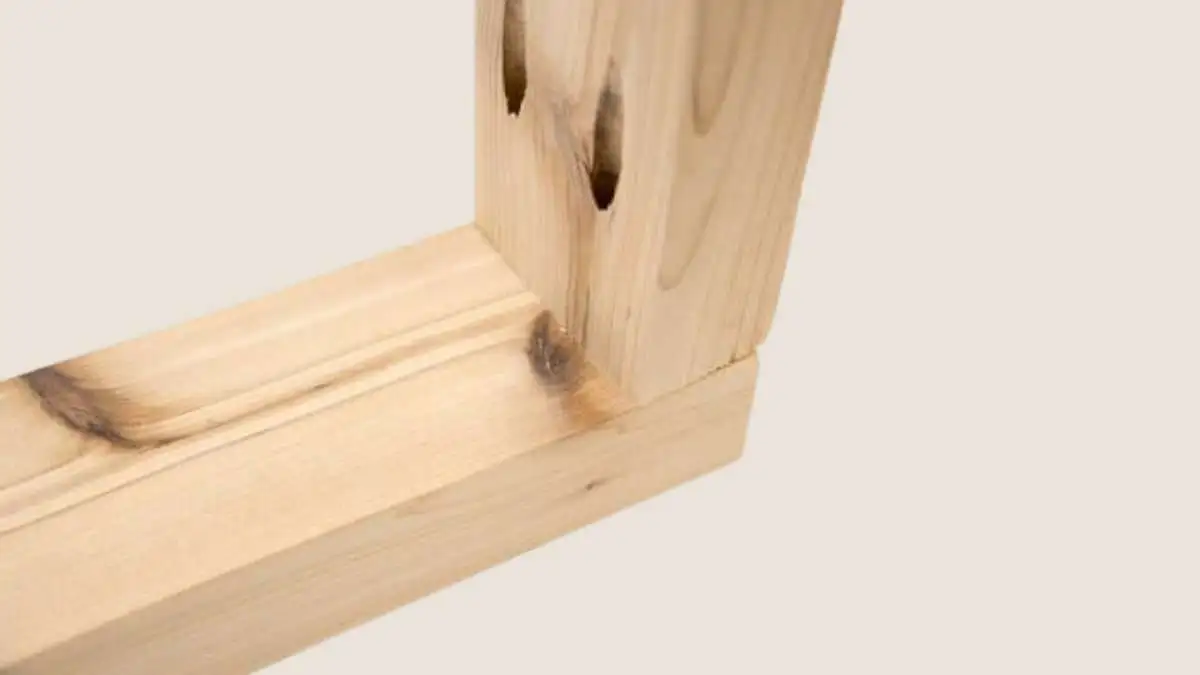
Pocket hole joinery has become extremely popular, especially among DIY builders and cabinet makers, because of how fast and easy it is. A special jig drills an angled pocket hole into one piece, and a self tapping screw then pulls the two pieces tightly together. No glue is required, though it can be added for extra strength. Pocket hole joints are great for cabinet face frames, furniture assembly, and quick builds. The holes are hidden on the inside of the joint, keeping the finished surface clean.
15. Scarf Joint
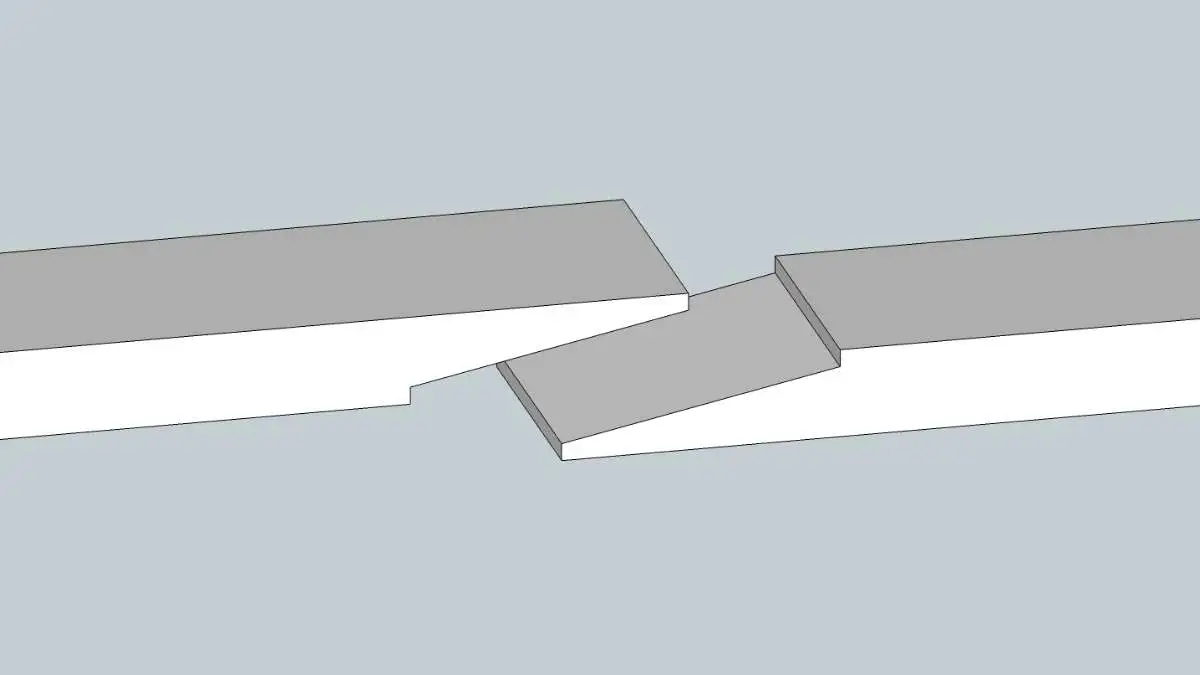
A scarf joint is used to join two pieces of wood end to end to create a longer length. Each piece is cut at a matching angle, increasing the gluing surface far beyond what a basic butt joint would offer. The result is a joint that is much stronger and less visible than a blunt end to end connection. Scarf joints are used in timber framing, boat building, musical instrument making, and any situation where you need to extend the length of a board without the joint being obvious.
Quick Comparison Table
Here is a quick reference summary of all 15 types of wood joints covered in this article.
| Joint Type | Difficulty | Strength | Best For |
| Butt Joint | Easy | Low | Basic framing |
| Miter Joint | Easy | Low-Medium | Picture frames, trim |
| Lap Joint | Easy | Medium | Frames, light structures |
| Finger Joint | Moderate | High | Lumber extension, trim |
| Dovetail Joint | Hard | Very High | Drawers, fine furniture |
| Box Joint | Moderate | High | Boxes, drawers |
| Mortise & Tenon | Hard | Very High | Chairs, tables, doors |
| Bridle Joint | Moderate | High | Frames, leg assemblies |
| Tongue & Groove | Moderate | Medium-High | Flooring, panels |
| Rabbet Joint | Easy | Medium | Cabinet backs, shelving |
| Dado Joint | Easy-Moderate | Medium | Shelves, bookcases |
| Biscuit Joint | Easy | Medium | Edge joining, panels |
| Dowel Joint | Moderate | Medium-High | Furniture, cabinets |
| Pocket Hole Joint | Easy | Medium | Cabinets, quick builds |
| Scarf Joint | Moderate | Medium-High | Extending lumber lengths |
Which Joint Should You Use?
There is no single best types of wood joint. The right choice always comes down to what you are building, what tools you have, your skill level, and how much time you want to invest.
For quick, functional builds, pocket hole and butt joints get the job done fast. For furniture that needs to stand up to daily use and last for decades, mortise and tenon or dovetail joints are worth the extra effort. For panel construction and flooring, tongue and groove is the industry standard for good reason. And for extending lumber or working with trim and moulding, finger joints and scarf joints are your best friends.
The more joints you learn, the more versatile you become as a woodworker or builder. Start with the simpler ones, get comfortable with the techniques, and gradually work your way up to the more demanding joints. Each one you master opens up new possibilities for what you can create.